
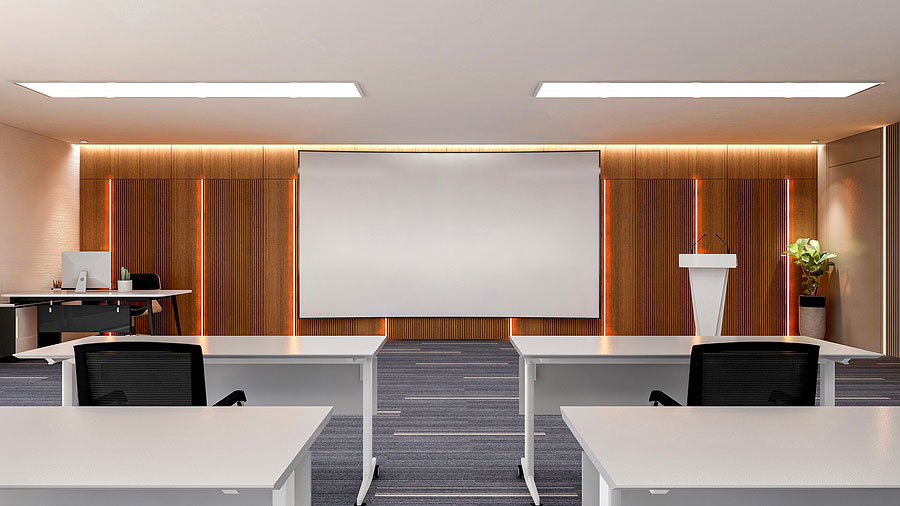
The type of lighting in your office can have a big impact on the office. It can affect the overall atmosphere and productivity of your employees. The right lighting can help to create a more comfortable and inviting space. However, the wrong lighting can be distracting and even harmful to your employees’ health. When we work with our clients on an Office Fit-Out, we discuss office lighting in detail.
What are the different types of lighting in the office?
There are many different types of lighting that can be used in an office. Each one has its own unique benefits and drawbacks. Some of the most common types of lighting include:
- Ambient lighting: Ambient lighting is the general lighting that fills an entire room. It is typically provided by overhead fixtures, such as fluorescent lights or recessed lights. Ambient lighting is important for providing overall visibility and a sense of brightness in a room
- Task lighting: This is focused lighting. It’s directed at a specific area, such as a desk or a work surface. It is important to provide adequate illumination for tasks such as reading, writing, or using a computer
- Accent lighting: Accent lighting is used to highlight specific features in a room, such as artwork, architectural details, or plants. It can be used to create a more dramatic or inviting atmosphere
- Pendant lighting: Pendant lighting is a type of ambient lighting that is suspended from the ceiling. It can be used to create a more stylish or elegant atmosphere
- Feature lighting: Feature lighting is a type of accent lighting that is used to highlight specific features in a room. It can be used to create a more dramatic or inviting atmosphere
When choosing lighting for your office, consider the needs of your employees and the overall atmosphere you want to create. By choosing the right type of lighting, you can create a more comfortable, productive, and inviting workspace for your employees.
Tips for choosing office lighting
Here are some additional tips for choosing lighting for your office:
- Consider the size of your office – The size of your workspace will determine the amount of lighting you need. If you have a small office, you may only need a few light fixtures. However, if you have a large office, you may need more light fixtures to provide adequate illumination
- Consider the layout of your office – The layout of your workspace determines where you need to place light fixtures. For example, if there are various desks, you’ll need to place light fixtures over them. This is so that employees can see what they are doing
- Consider the type of work that is done in your office – The type of work that is done in your office determines the type of lighting needed. For example, if your employees do a lot of detail-oriented work, bright, focused lighting will be required. However, if your employees do creative work, provide them with softer, more diffused lighting
- Consider the overall atmosphere you want to create – The type of lighting you choose can help to create a certain atmosphere in your office. For example, if you want to create a more formal atmosphere, you may want to use chandeliers or other types of high-end lighting fixtures. However, if you want to create a more casual atmosphere, you may want to use track lighting or other types of recessed lighting
By following these tips, you can choose the right type of lighting for your office and create a more comfortable, productive, and inviting workspace for your employees.