
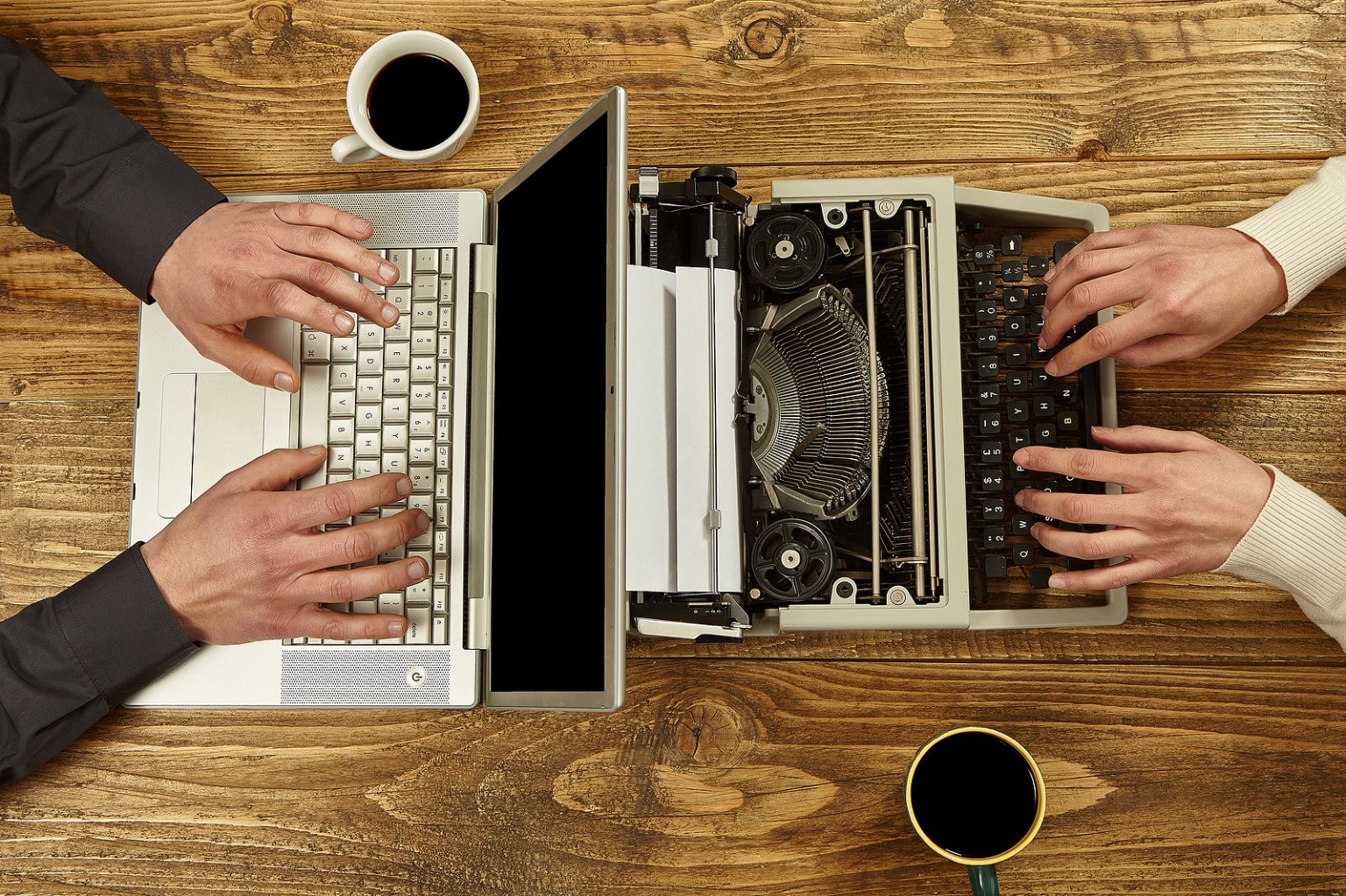
Office design has undergone a remarkable transformation over the past one hundred years. What began as a rigid, hierarchical workspace that was built for nothing more than efficiency and practicality has evolved into a flexible, human-centred environment that prioritises creativity, collaboration and wellbeing. Understanding this evolution offers insight into how work itself has changed and where it may be heading next.
The early 20th Century: efficiency & control
The early 1900s saw office layouts that were heavily influenced by industrial principles. This includes scientific management that was pioneered by the likes of Frederick Winslow Taylor. Back then, office spaces were designed for maximum efficiency and supervision. In fact, they often resembled factory floors as opposed to calm, clean spaces.
These large, open rooms were filled with rows of desks that allowed managers to oversee the workers more easily, giving them front-row seats to workplace labour. However, executives often occupied more private office spaces that were situated along the perimeter. This layout reinforced hierarchy and control, therefore reflecting the priorities and values of the time: productivity, discipline and order.
Mid-Century innovation: the rise of the “office landscape”
By the 1950s-1960s, attitudes towards working began to shift. The industrial-style, hierarchical system was beginning to change in favour of the German concept of Bürolandschaft, which introduced more organic layouts.
Developed by the Quickborner team, this approach to office design emphasised communication and workflow as opposed to a rigid, hierarchical structure. Desks were arranged based on team interactions and partitions were minimised.
Plants and softer furnishings were added to create a more comfortable atmosphere. While they were still considered to be functional office spaces, this shift in the workplace started to acknowledge the human side of work.
The 1960s-1980s: the cubicle era
These decades saw the invention of the cubicle system, also known as the “action office”. It was proposed and brought in by Robert Propst for Herman Miller and was initially intended to give employees privacy and flexibility. However, over time, cubicles become synonymous with monotony and confinement. While companies adopted them as a cost-effective way of maximising office space, cubicles were often shrunk to uniform, box-like partitions. This meant that the office cubicle system quickly became criticised for isolating employees and stifling their levels of creativity.
The 1990s-2000’s: open-plan offices
In response to the downsides of cubicles, many organisations embraced open-plan offices. By removing partitions, companies aimed to foster collaboration, transparency and teamwork as a whole. Tech companies like Google popularised this open-plan office trend by creating vibrant workspaces with shared desks, breakout spaces and recreational amenities.
The idea was to blur the lines between work and leisure, encouraging innovation and spontaneous interaction throughout the working day. However, according to Psychology Today, open-plan office layouts also brought challenges, including noise, lack of privacy and reduced concentration for some workers.
With this in mind, office designers went back to the drawing board, looking for a way to balance it all while also ensuring that workers are happy and productive, as happy workers are often productive ones, according to the University of Oxford. This is where more activity-based working and flexibility came in as we entered the 2010s.
The 2010s: activity-based working & flexibility
As workplaces become more dynamic, the concept of activity-based working (ABW) has emerged. Instead of assigning employees a fixed desk, offices were designed with a variety of spaces that were tailored to different tasks. This included quiet zones for focused work, collaborative areas for teamwork and informal lounges for relaxation. This sort of approach reflected the growing importance of autonomy and flexibility, all while being supported by advances in mobile technology and cloud computing.
The post-pandemic era: hybrid & human-centric design
The COVID-19 pandemic dramatically accelerated changes in office design. Remote work has become widespread, therefore forcing companies to rethink the role of the physical office and its place in the future of the workplace. Today, many organisations are adopting hybrid working models or even models requiring fully-remote work. In a hybrid working model, employees are required to split their time between the office and their home. As a result, offices are being redesigned to serve as hubs for collaboration rather than spaces for routine tasks. Some common office design trends in this day and age include:
- Well-being-focused design, such as the inclusion of natural light, ventilation and biophilic elements
- Flexible layouts that can be easily reconfigured
- Technology integration for seamless remote collaboration
- Smaller, decentralised offices that are closer to where the employees live
What is the future of office design?
Looking ahead, office design will likely continue to evolve alongside changes in technology, culture and workforce expectations. Artificial intelligence, virtual reality and sustainability will play an increasingly important role in the future of office and workplace design, regardless of the sector or industry. It’s often speculated that future offices will prorstise things like:
- Personalised working environments
- Carbon-neutral materials and energy use
- Enhanced digital-physical integration
- Greater emphasis on employee experience
- AI-driven experiences
C
C
FIT Interiors offers professional office fit-out and refurbishment services in Nottingham. No matter the size of your space or the complexity of the project, we can transform your workplace into a modern, functional environment. For more information about our services – including commercial flooring, ceiling installations, breakout area construction, electrical works, and more – please don’t hesitate to contact our friendly and experienced team. We’re always happy to help.